
Maximum Dose of Tadalafil in 24 Hours: A Safety Guide
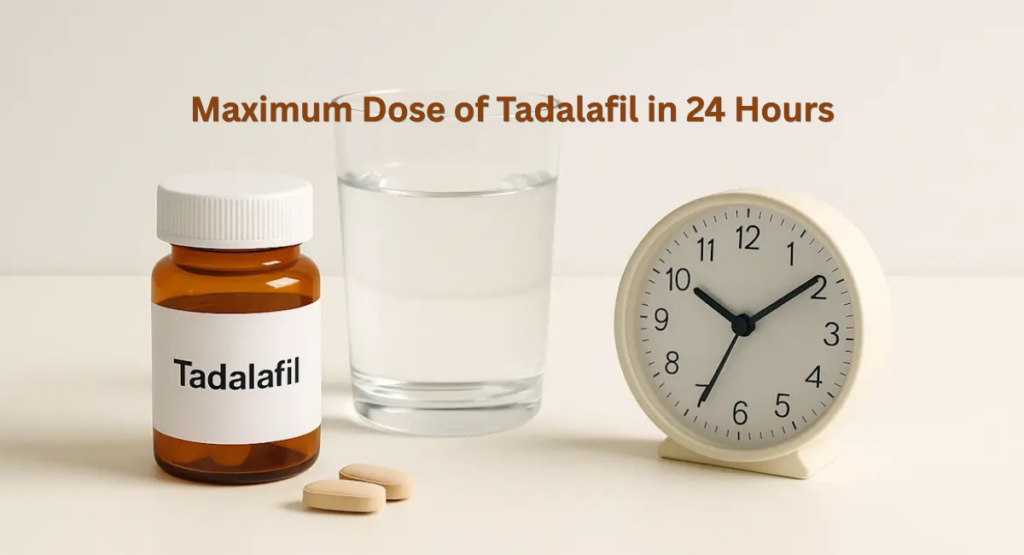
If you have been prescribed tadalafil, or you are researching it before a doctor’s visit, one of the most common questions is simple: how much is too much in a single day? The answer depends on which condition tadalafil is treating and which dosing schedule your prescriber has chosen for you. This guide walks through the FDA-approved dosing ceilings, why they exist, and what to do if you are ever unsure whether you have taken more than you should.
- As-needed ED dosing: up to 20 mg, once in 24 hours
- Daily ED/BPH dosing: up to 5 mg, once daily
- PAH dosing (Adcirca/Tadliq, a different product): up to 40 mg daily
- There is no FDA-approved 60 mg dose for any tadalafil indication
Tadalafil is a phosphodiesterase type 5 (PDE5) inhibitor sold under the brand name Cialis for erectile dysfunction (ED) and benign prostatic hyperplasia (BPH), and under the brand names Adcirca and Tadliq for pulmonary arterial hypertension (PAH). These are related but distinct uses, with different approved dose ranges, so “the maximum dose of tadalafil” genuinely depends on why it was prescribed. [Source: Cialis FDA Prescribing Information]
What Is the Maximum Dose of Tadalafil in 24 Hours?
|
20 mg
Max as-needed (ED)
|
5 mg
Max daily (ED/BPH)
|
36 hrs
Duration, single dose
|
As-needed dosing for ED (up to 20 mg)
For men using tadalafil on an as-needed basis for ED, the FDA-approved dosing range is 5 mg to 20 mg taken before anticipated sexual activity, with 20 mg as the maximum single dose in a 24-hour period. [Source: Cialis FDA Prescribing Information, Section 2.1] Clinical trial data cited in the label show that tadalafil can support improved erectile function for up to 36 hours after a single dose, which is part of why it is sometimes referred to informally as a longer-acting option compared with other PDE5 inhibitors. [Source: Cialis FDA Prescribing Information, Section 14] This is not a reason to take a second dose within the same 24-hour window, it explains the extended duration of a single dose, not a higher ceiling.
Daily dosing for ED and BPH (up to 5 mg)
For continuous, once-daily use, whether for ED, BPH, or both together, the FDA-approved maximum is 5 mg once daily, taken at approximately the same time each day. [Source: Cialis FDA Prescribing Information, Section 2.2 to 2.3] Daily dosing typically starts at 2.5 mg and may be increased to 5 mg based on individual response and tolerability, at the prescriber’s discretion.
Why there is no FDA-approved 60 mg dose
Tadalafil tablets are available in 2.5 mg, 5 mg, 10 mg, and 20 mg strengths for ED and BPH. [Source: Cialis FDA Prescribing Information, Section 3] There is no FDA-approved 60 mg tadalafil dose for any indication, and combining tablets to reach doses above the approved ceiling is not supported by clinical trial data and increases the risk of side effects without established additional benefit.
Tadalafil Dosing by Approved Use
| Indication | Brand | Typical Dose | Max in 24 Hours |
|---|---|---|---|
| ED, as-needed | Cialis | 10 mg | 20 mg |
| ED, daily | Cialis | 2.5 to 5 mg | 5 mg |
| BPH | Cialis | 5 mg | 5 mg |
| PAH | Adcirca / Tadliq | 40 mg | 40 mg |
[Source: Cialis and Adcirca FDA Prescribing Information] This table reflects standard-indication dosing and does not account for individual adjustments a prescriber may make based on kidney or liver function, other medications, or medical history.
A note on Adcirca/Tadliq and the “40 mg” figure: Some readers searching for the tadalafil maximum dose encounter the 40 mg figure and assume it applies to ED. It does not. The 40 mg dose is specific to pulmonary arterial hypertension, uses a different brand and formulation, and is prescribed under an entirely separate treatment plan. [Source: Adcirca FDA Prescribing Information] Taking 40 mg of tadalafil intended for ED, whether by combining tablets or otherwise, is off-label and not supported by the ED/BPH prescribing data.
Who Should Not Take Tadalafil
Talk to your doctor before taking tadalafil if any of the following apply to you:
- You take any form of organic nitrate, regularly or intermittently (including nitroglycerin), due to the risk of severe, potentially life-threatening drops in blood pressure. [Source: Cialis FDA Prescribing Information, Section 4.1]
- You have been advised by a doctor to avoid sexual activity due to cardiovascular risk.
- You have a history of vision loss related to non-arteritic anterior ischemic optic neuropathy (NAION).
- You have severe hepatic impairment or are on dialysis. [Source: Cialis FDA Prescribing Information, Section 8.6 to 8.7]
- You take certain alpha-blockers; combined use requires dose spacing and monitoring due to additive blood-pressure-lowering effects. [Source: Cialis FDA Prescribing Information, Section 7.1]
This is not a complete list. Share your full medical history and current medications with your prescriber before starting tadalafil.
What Happens If You Exceed the Maximum Dose?
Clinical studies of tadalafil at doses up to 100 mg found that adverse effects (including headache, dyspepsia, back pain, and muscle aches) were more frequent and more intense than at approved doses, without corresponding evidence of added therapeutic benefit. [Source: Cialis FDA Prescribing Information, Section 6] Practical steps if you are concerned you or someone else has taken more than the maximum dose:
- Do not take an additional dose to “correct” the situation.
- Watch for warning signs: an erection lasting longer than 4 hours (priapism) is a medical emergency and requires immediate care. [Source: Cialis FDA Prescribing Information, Section 5.4]
- Sudden decrease or loss of vision or hearing, chest pain, or fainting also warrant immediate medical attention. [Source: Cialis FDA Prescribing Information, Sections 5.2 to 5.3]
- Contact your prescriber, a pharmacist, or Poison Control (1-800-222-1222 in the US) if you are unsure whether a dose was excessive.
Tadalafil Dosing and Kidney or Liver Function
Because tadalafil is cleared through the kidneys and liver, impaired function in either organ can change how long it stays active in the body, which affects safe dosing. The label specifies reduced starting doses and, in some cases, longer intervals between doses for people with renal impairment, and advises against daily dosing in severe renal or hepatic impairment. [Source: Cialis FDA Prescribing Information, Section 2.4, 8.6 to 8.7] This is one of the clearest reasons self-adjusting a tadalafil dose without medical input can be risky, since the standard maximum does not apply the same way to every patient.

How Long Does Tadalafil Last, and Why Timing Matters
Tadalafil has a longer half-life than most other PDE5 inhibitors, which is part of why a single as-needed dose can remain effective for up to 36 hours. [Source: Cialis FDA Prescribing Information, Section 14] This extended activity is also why the nitrate interaction window is longer than with shorter-acting options: significant interaction with nitrates has been observed up to 24 hours after a tadalafil dose, and at least 48 hours should pass after the last tadalafil dose before nitrate use is considered, and only under close medical supervision if medically necessary. [Source: Cialis FDA Prescribing Information, Section 5.1]
Common Side Effects at Standard Doses
At approved doses, the most commonly reported side effects include headache, indigestion, back pain, muscle aches, flushing, and nasal congestion. [Source: Cialis FDA Prescribing Information, Section 6.1] Back pain and muscle aches typically appear 12 to 24 hours after dosing and resolve within about 48 hours. Most side effects at standard doses are mild to moderate, though any side effect that feels severe or does not improve should be discussed with a healthcare provider.
When to See a Doctor
Seek medical care promptly if you experience an erection lasting more than 4 hours, sudden vision or hearing changes, chest pain, or symptoms of a severe allergic reaction. Contact your prescriber for guidance if your current dose does not seem to be working, if you are considering a dose change, if you are prescribed a new medication that might interact with tadalafil, or if you have new kidney, liver, or cardiovascular symptoms.
Frequently Asked Questions
What is the maximum safe dose of tadalafil in 24 hours?
Can I take tadalafil every day?
Is 40 mg of tadalafil too much for ED?
Can I take tadalafil with nitrate medications?
How long does tadalafil stay in your system?
A Word on Unverified or Counterfeit Tadalafil
Tadalafil should only be obtained through a licensed prescriber and pharmacy. Products marketed as “natural tadalafil” or herbal alternatives are not FDA-regulated for safety or effectiveness, and counterfeit tadalafil sold outside licensed channels may contain incorrect, contaminated, or undisclosed ingredients. [Source: FDA Consumer Updates, “Is It Really ‘FDA Approved’?”] If a dose, source, or product feels uncertain, confirm with a pharmacist or prescriber before taking it.